Next-Generation Sequencing -
for Gut Microbiome Testing

The most advanced gut microbiome technology available - analysing over 10 million microbial genetic data points per sample to reveal the biological ecosystem shaping the health of mothers and babies.


Powered by Independente Research

Next-Generation Sequencing - The Most Powerful Gut Test Available

Reading the complete genetic blueprint of every organism in your gut.

Next-Generation Sequencing (NGS) is a breakthrough laboratory technology that reads the DNA of every single microorganism living in the gut - not just a selected few. Unlike older testing methods that rely on growing cultures in a lab or detecting a limited range of known organisms, NGS reads the full genetic sequence of the entire microbial community.

The result is an extraordinarily detailed picture of gut health - identifying thousands of bacterial species, archaea, fungi, and viruses, measuring their relative abundance, and revealing how the ecosystem functions as a whole. This is the same technology used in leading academic research institutions worldwide - and it is the foundation of every Kids BioCare gut test.

  • Whole-genome shotgun sequencing reads every DNA fragment in the sample - not just selected marker genes
  • 16S rRNA profiling identifies bacterial communities with species-level precision
  • Metagenomics analysis reveals the functional capacity of the microbiome - not just who is there, but what they do
  • 10+ million data points generated from a single stool sample, processed in world-class accredited laboratories
The Process

How NGS Gut Testing Works - Step by Step

From a simple home sample collection to a detailed biological report - here is how the NGS process turns a stool sample into 10 million data points of insight.

1
Sample Collection

A small stool sample is collected at home using the simple, sterile collection kit included in your Kids BioCare testing package. The process takes under 5 minutes and is comfortable for both mother and baby.

2
DNA Extraction

The sample arrives at our accredited laboratory, where DNA is extracted from every microorganism present - bacteria, archaea, fungi, and viruses - using validated clinical-grade protocols.

3
Sequencing & Analysis

Millions of short DNA fragments are simultaneously sequenced using high-throughput NGS technology. Bioinformatics algorithms then reassemble and identify each fragment against validated reference databases of over 25,000 known microbial species.

4
Report & Consultation

Results are presented in a clear, colour-coded report through BioHealthcare Hub, covering diversity scores, species abundance, ecosystem balance, and personalised recommendations. A specialist doctor consultation is included to help you understand exactly what your results mean.

How Much Data Does NGS Generate?
More Than Any Other Gut Test.

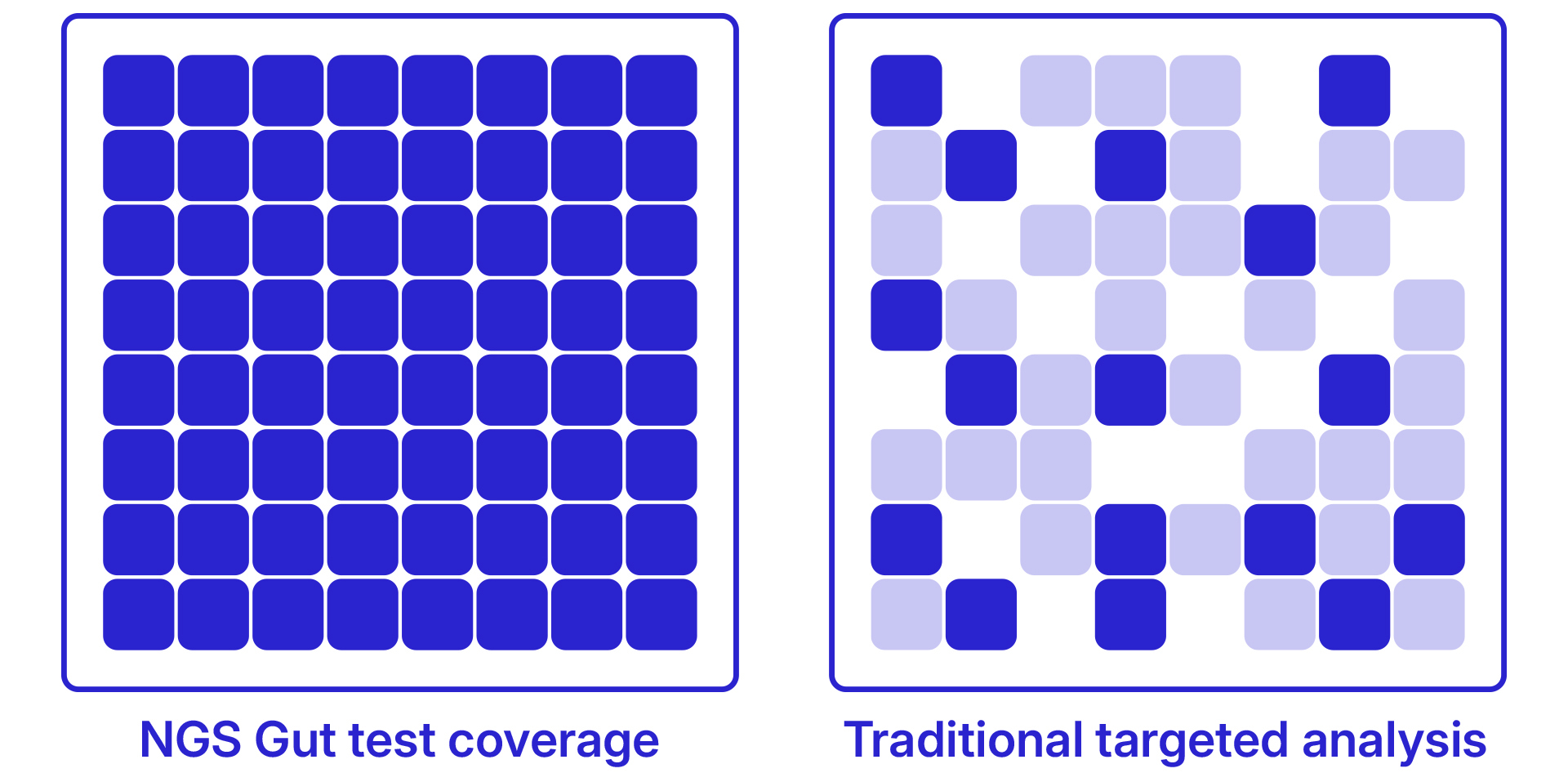
The scale of data generated by NGS is what sets it apart from every other approach to gut health testing. No other commercial test comes close.

1
Stool sample
collected at home
~50M
Raw DNA fragments
extracted from sample
10M+
Quality-filtered reads
processed for analysis
1,000+
Microbial species
identified & quantified
1
Clear colour-coded
report for your family
10M+
Microbial genetic data points analysed per sample
vs ~1,000 with standard culture tests
1,000+
Distinct microbial species identified in a single test
including rare and previously unculturable species
25,000+
Known microbial species in our reference database
continuously updated from global research
99.9%
Sequencing accuracy across validated quality checks
accredited laboratory protocols

Laboratory & Sequencing Specifications

Sequencing Method

Whole-genome shotgun metagenomics & 16S rRNA V3-V4 amplicon sequencing

Read Depth

Minimum 10 million quality-filtered paired-end reads per sample

Species Resolution

Identification to species & strain level - not genus level only

Reference Database

NCBI, SILVA, GTDB - updated quarterly with latest global research

Turnaround Time

Full report delivered in 2-3 weeks from receipt of sample at laboratory

Laboratory Accreditation

ISO 15189 & UKAS accredited laboratories - same standard as clinical diagnostic labs

Sample Stability

Validated collection buffer maintains sample integrity for up to 14 days in transit at room temperature

Report Format

Delivered via BioHealthcare Hub - colour-coded, downloadable PDF, with specialist consultation

NGS Gut Testing for Babies & Mothers

The gut microbiome works differently - and matters differently - depending on your stage of life. Kids BioCare provides tailored NGS gut testing and reporting for both babies and mothers, recognising the distinct biological questions each test needs to answer.

For Babies & Young Children

The Infant Gut - The Most Critical Window

The first three years of a child's life represent the most important period of gut microbiome development. The ecosystem established in these years sets the biological foundations for immune function, metabolic health, brain development, and long-term disease risk. NGS testing gives parents an unprecedented view of how this ecosystem is forming - and whether it is developing the diversity and balance their child needs.

Baby gut health testing
Microbiome seeding at birth: NGS reveals whether the birth process transferred a healthy, diverse microbial ecosystem from mother to baby - or whether key species are missing due to caesarean delivery, antibiotics, or other disrupting factors.
Bifidobacterium colonisation: The dominant species in a healthy infant gut, Bifidobacterium is critical for immune education, vitamin synthesis, and protection from pathogenic bacteria. NGS quantifies its presence and diversity at species level.
Immune system programming: The infant microbiome trains the immune system to distinguish self from non-self. NGS identifies which immune-regulating species are present - and whether protective species like Akkermansia and Faecalibacterium are establishing at the right time.
Allergy and eczema risk markers: Research has identified specific microbiome signatures at 3 months of age that predict allergy, eczema, and asthma risk by age 7. NGS testing can reveal whether these protective species are present.
Gut-brain axis development: The enteric nervous system that becomes a child's "second brain" is seeded in infancy. NGS identifies whether serotonin-producing species are present and establishing - providing insight into the biological foundations of mood, behaviour, and cognitive development.
Weaning and dietary transition: As solid foods are introduced, the microbiome undergoes a dramatic transformation. NGS testing at 6-12 months reveals how this transition is progressing and whether the ecosystem is diversifying in response to new foods.
Typical Healthy Infant Microbiome Profile - NGS View
Bifido­bact.
longum
Bifido­bact.
breve
Lacto­bacillus
Bifido­bact.
infantis
Strepto­coccus
salivarius
Rumi­nococcus
Faecali­bact.
C. difficile
†“ low

Green = healthy abundance · Grey = developing · Red = concern if elevated

For Mothers - Pre & Post Pregnancy

The Maternal Gut - The Biological Foundation

A mother's gut microbiome is not just her own biological concern - it is the primary ecosystem that will be transferred to her newborn at birth. It also plays a direct role in shaping pregnancy outcomes, immune function during pregnancy, postnatal recovery, and the quality of breast milk. NGS testing for mothers reveals the state of this critical ecosystem before, during, and after pregnancy.

Maternal gut health testing
Pre-pregnancy microbiome preparation: The composition of a mother's microbiome before conception influences fertility, hormone balance, and the biological environment the baby will develop within. NGS reveals whether beneficial species are present and whether intervention could optimise the ecosystem before pregnancy.
Pregnancy microbiome shifts: The maternal microbiome restructures significantly during the third trimester - naturally increasing certain species to support energy extraction and immune tolerance for the foetus. NGS identifies whether this normal adaptation is occurring, or whether dysbiosis (imbalance) is present - linked to gestational diabetes, premature birth, and increased inflammatory markers.
Gut barrier integrity: A healthy gut lining is critical for preventing systemic inflammation during pregnancy. NGS measures species like Akkermansia muciniphila that maintain gut barrier function - low levels are associated with increased inflammatory markers and pregnancy complications.
Transfer potential to baby: The composition of the maternal microbiome at the time of birth is the primary determinant of the baby's initial gut ecosystem. NGS reveals whether the maternal microbiome contains the key Bifidobacterium and Lactobacillus species that a newborn needs most - giving parents actionable insight before the birth.
Postnatal recovery and breast milk: After birth, the maternal microbiome directly influences breast milk composition - including the human milk oligosaccharides (HMOs) that feed the baby's own microbiome. NGS testing post-birth reveals how the ecosystem is recovering and whether beneficial species are present in sufficient diversity.
Dysbiosis and postnatal health: Postnatal gut dysbiosis - disruption of the microbial ecosystem - is linked to postnatal depression, fatigue, immune suppression, and digestive disturbances in new mothers. NGS provides a detailed picture of ecosystem balance during this critical period.
Maternal Microbiome Profile - NGS Analysis
Lacto­bacillus
crispatus
Akkerm­ansia
Bifido­bact.
longum
Faecali­bact.
prausnitzii
Prevotella
Rumino­coccus
Clostri­dium
†‘ elevated
Desulfo­vib.

Purple = healthy abundance · Grey = low · Red = concern if elevated

Why NGS Testing Makes a Meaningful Difference

The depth of data that NGS provides translates into clinical insights and family benefits that simply are not possible with any other approach to gut testing.

Unmatched Species Resolution

NGS identifies microorganisms to species and strain level - not just genus. This matters because two different strains of the same species can have completely opposite effects on health. Standard tests cannot make this distinction.

1,000+ Species identified per sample

Detects the Undetectable

Approximately 75% of the microbial species living in the human gut cannot be grown in a culture dish - which means they are entirely invisible to standard culture-based testing. NGS reads their DNA directly, revealing the full picture.

75% Of gut species missed by culture tests

Ecosystem Balance Scoring

NGS doesn't just tell you what species are present - it measures their relative abundance and how they interact as an ecosystem. This reveals whether beneficial species are dominant, whether harmful species are overgrown, and how diverse the overall community is.

Shannon Diversity index & Firmicutes/Bacteroidetes ratio

Functional Microbiome Insights

Beyond identifying species, whole-genome shotgun NGS can reveal what the microbial community is actually doing - which metabolic pathways are active, which short-chain fatty acids are being produced, and which immune-modulating compounds the ecosystem is generating.

SCFA Short-chain fatty acid production profiling

Quantitative, Not Just Qualitative

NGS provides precise numerical data on the relative abundance of every species detected - allowing genuine comparison between tests over time. You can track whether an intervention (dietary change, probiotic, or antibiotic course) has measurably shifted the ecosystem.

% Abundance Precise quantification per species

Antibiotic Resistance Profiling

NGS can detect antibiotic resistance genes within the microbiome - an increasingly important clinical concern for infants who have been exposed to antibiotics in early life. This is not possible with standard gut testing approaches.

ARG Antibiotic resistance gene detection

Safe for Babies from Birth

The NGS gut test requires only a small stool sample - no invasive procedure, no discomfort. The home collection kit is designed to be simple and parent-friendly, making it safe and practical for newborns, infants, and toddlers at any age.

Day 1 Safe for testing from birth onwards

Track Change Over Time

Because NGS produces precise numerical data, repeat testing at key milestones - birth, 3 months, 6 months, weaning - creates a longitudinal picture of how the microbiome is developing. Parents can see whether dietary changes and probiotic support are making a measurable difference.

Timeline Testing at birth · 3 months · 6 months · weaning

Expert Doctor Consultation Included

Every Kids BioCare NGS report comes with a consultation with a GI specialist or biomedical doctor - who reviews your results, explains exactly what the findings mean for your child or your pregnancy, and guides you on next steps. The data becomes insight. The insight becomes action.

Included GI specialist consultation with every report

How NGS Compares to Other Gut Testing Methods

Not all gut tests are equal. The method used to analyse a sample determines what can - and cannot - be detected. Here is a direct comparison between the approaches available, and why NGS is the only method that provides a complete picture of the gut microbiome.

Feature NGS Sequencing
Kids BioCare
Standard
Culture Test
PCR Test 16S Basic
Test
Stool
Antigen Test
Species identified per test 1,000+ 10-30 5-20 200-500 1-5
Data points per sample 10 million+ ~1,000 ~500 ~500,000 Qualitative only
Detects unculturable species
Species-level identification Partial Partial Genus only
Strain-level identification
Quantitative abundance data Limited
Diversity & richness scoring Basic
Functional microbiome analysis
Antibiotic resistance detection Limited
Detects fungi & viruses Partial Targeted only
Gut barrier integrity markers
SCFA production profiling
Suitable for infants from birth
Home collection
Doctor consultation included Varies
Used in academic research Declining Some
Longitudinal tracking & comparison Limited
✓ = Full capability  ·  Partial = Limited or targeted capability  ·  ✗ = Not supported  ·  SCFA = Short-chain fatty acids  ·  PCR = Polymerase chain reaction
NGS - What You Get

A complete, quantitative picture of over 1,000 microbial species - including rare and unculturable organisms - with functional analysis, diversity scoring, and species-level identification. The same standard of testing used in the world's leading microbiome research institutions, now available for families at home.

Standard Tests - What You Miss

Culture-based tests and basic PCR panels typically identify fewer than 30 species - and are entirely blind to the 75% of gut organisms that cannot be grown in a laboratory. They provide a qualitative snapshot at best, and no insight into ecosystem diversity, function, or how the microbiome is changing over time.

Your NGS Results - Clear, Colour-Coded, and Clinically Informed

10 million data points. One report. Clear next steps.

The Kids BioCare NGS report translates complex genomic data into a clear, family-friendly format delivered through BioHealthcare Hub. Every result is presented with context - so you understand not just what is in your gut, but what it means for your health and your child's development.

NGS Microbiome Report
  • Diversity Score: A single number summarising overall microbiome health - compared against validated reference ranges for your age, life stage, and region.
  • Species Abundance Map: A visual breakdown of every detected species - with colour coding for beneficial, neutral, and potentially concerning organisms.
  • Ecosystem Balance Analysis: Key ratios including Firmicutes/Bacteroidetes and Akkermansia abundance - with clinical context explaining what shifts in these markers mean.
  • Functional Capacity Profile: Which metabolic pathways are active, which short-chain fatty acids your microbiome is producing, and what immune-modulating compounds are present.
  • Personalised Recommendations: Dietary, probiotic, and lifestyle guidance based specifically on your results - reviewed and contextualised in your included specialist consultation.
Start Your Test

The most advanced gut test available - for your family.

Kids BioCare brings research-grade NGS microbiome sequencing to mothers and babies at home - with clear results, expert guidance, and the biological insight that makes a real difference.

Start Your Test